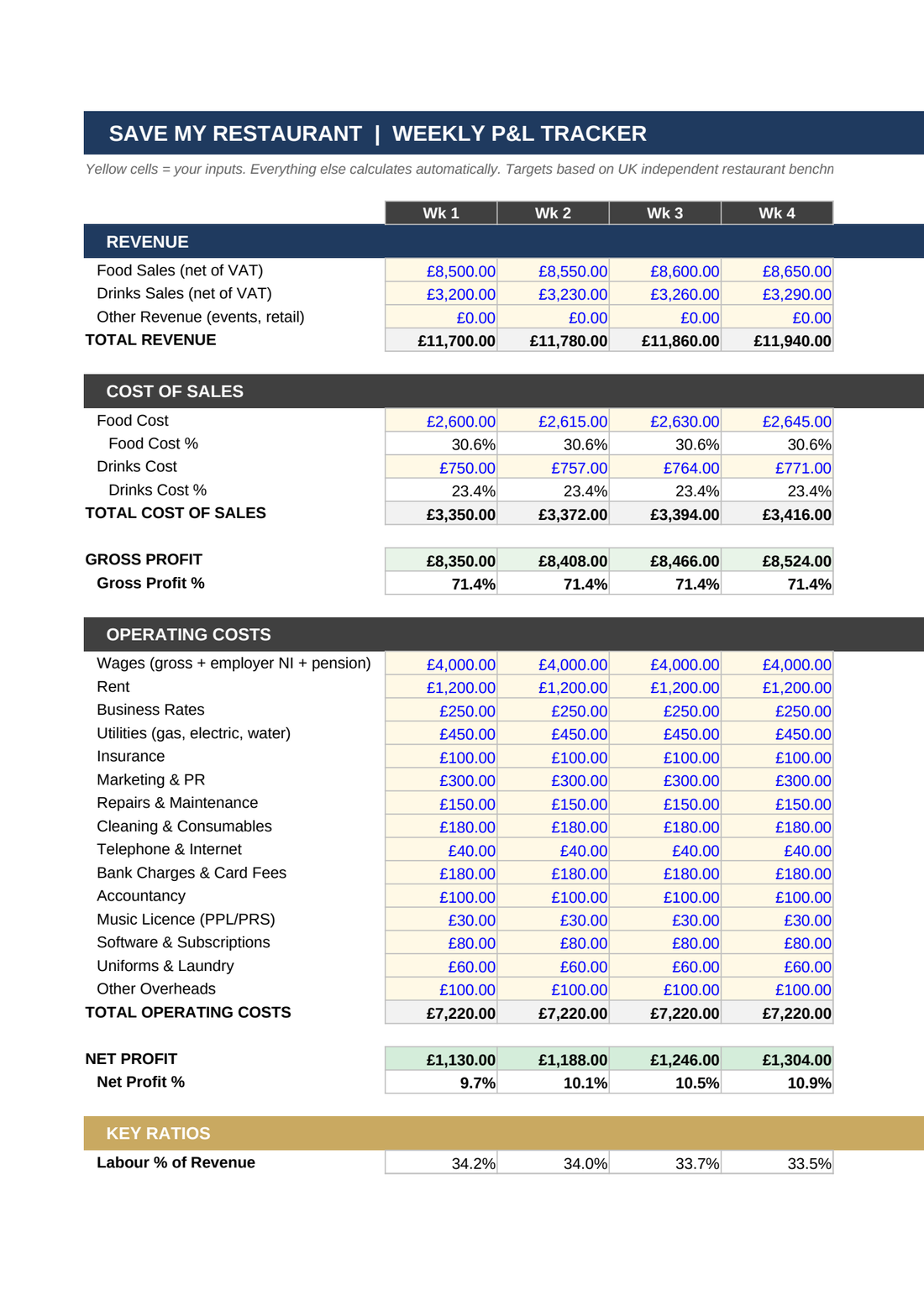
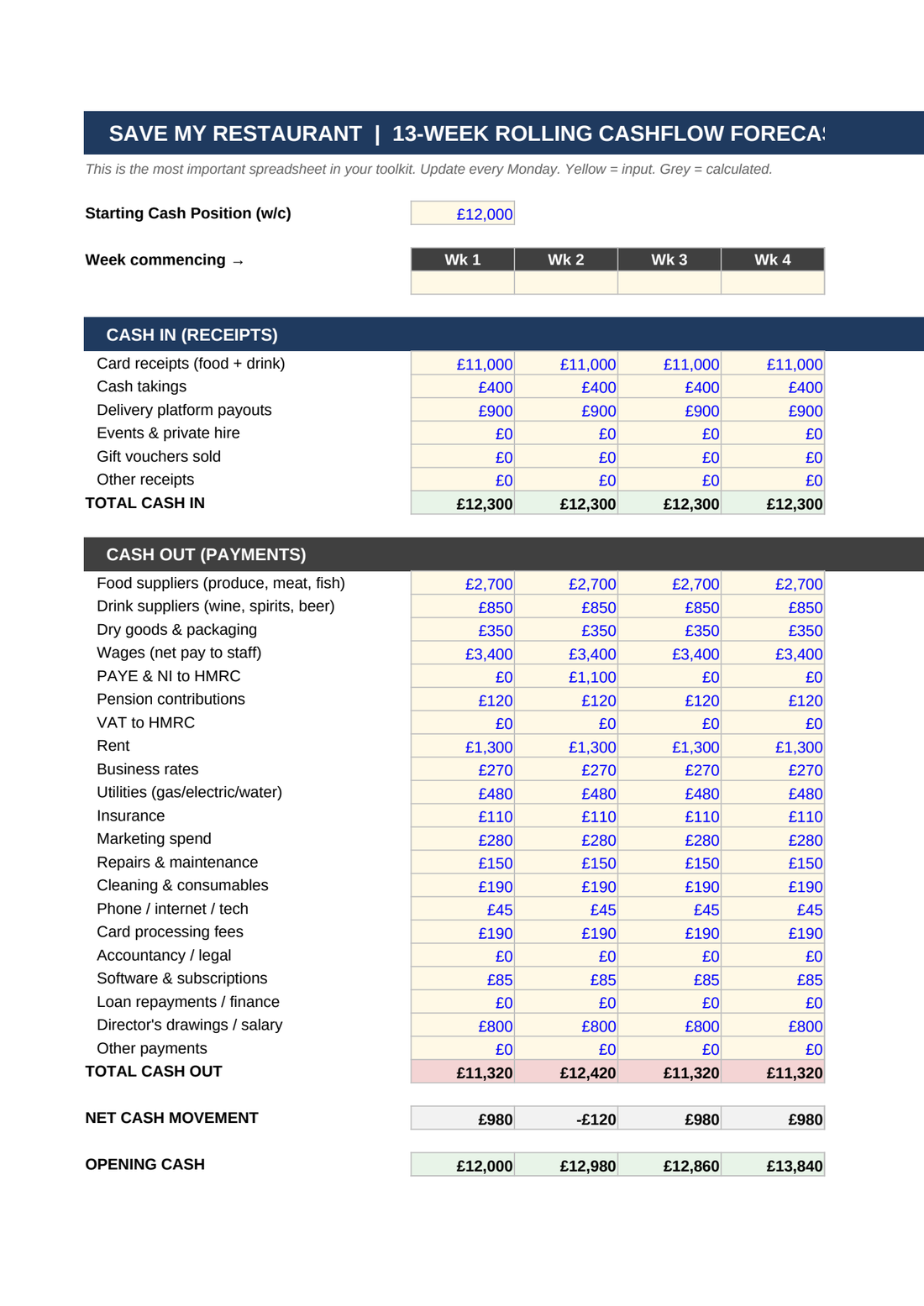
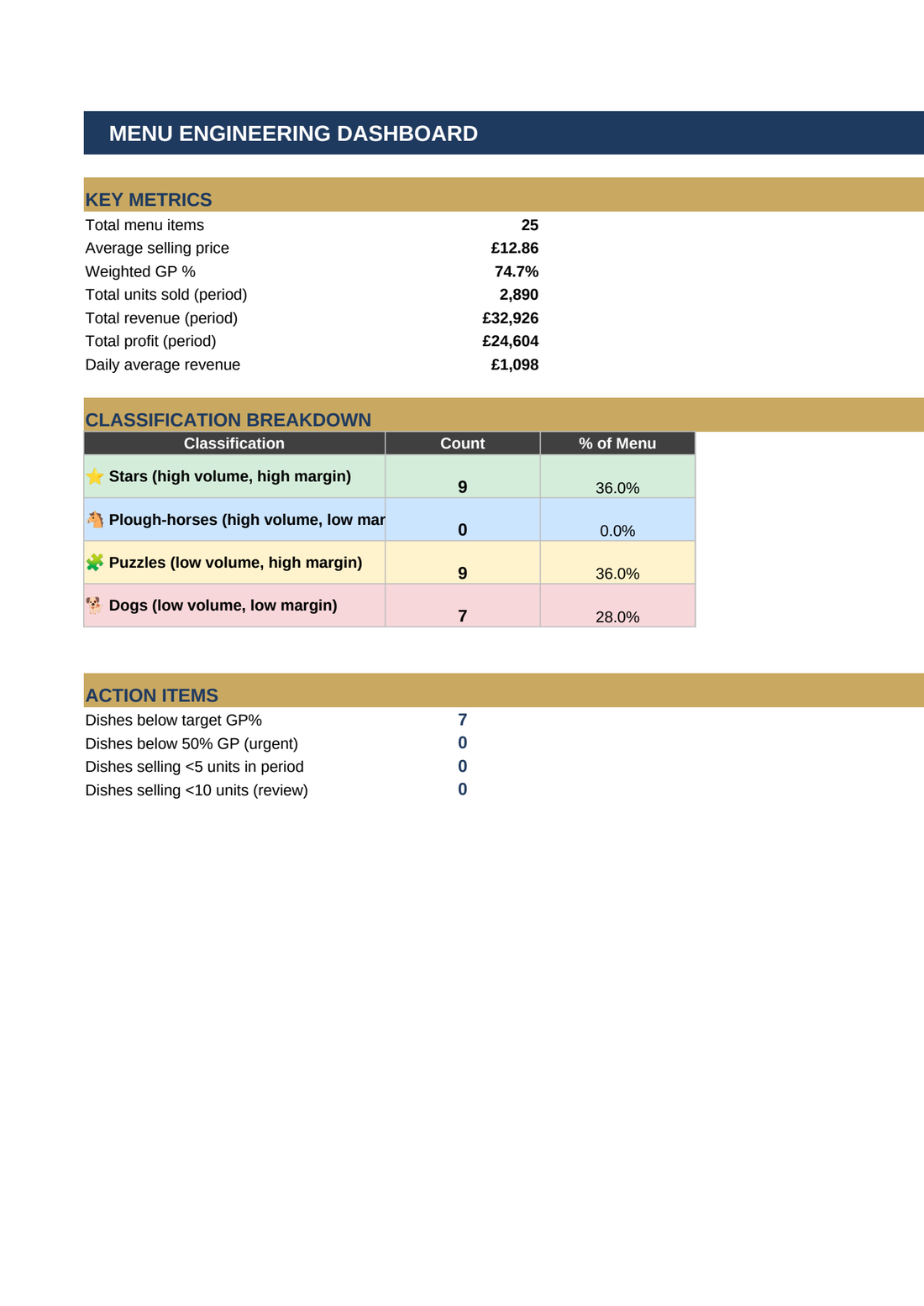
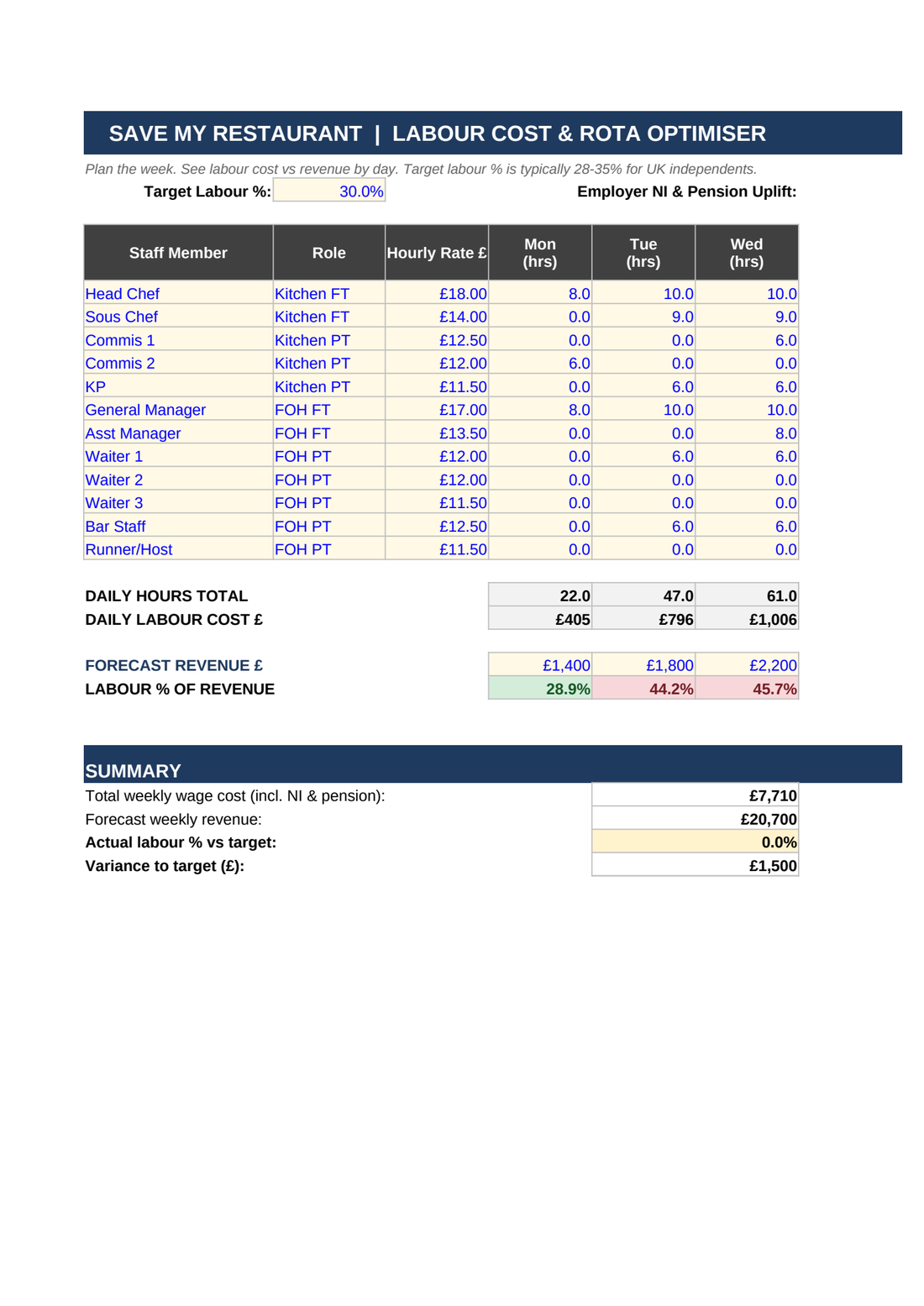
Seven days a week. Fourteen-hour shifts. Margins that don't add up. Suppliers quietly owed money you don't quite have. You're doing the work of four people and paying yourself last. This is the point where operators either put a proper system in, or drift into eighteen months of slow decline without noticing.
This is the system.
Independent restaurants rarely collapse in dramatic events. They decline quietly, over twelve to eighteen months, while the owner works harder and harder to keep things stable. Covers feel normal. The food is still good. The team mostly shows up. From the outside, nothing looks wrong.
Inside, margins are eroding. Supplier balances are drifting up. Cash is tighter every month. The owner knows something is off but cannot pin it down, because the numbers are not in a form anyone can actually read. By the time the picture is clear, the runway is shorter than it should have been.
You are not failing because you are lazy or unlucky. You are running a complex business without a system. That is a fixable problem. But not indefinitely.
The gap is not effort. You are already giving the business everything you have. The gap is infrastructure. Weekly numbers you can trust. A menu you have actually engineered, not guessed. A cashflow forecast that tells you the cliff is coming, twelve weeks before you fall off it. Review generation running on autopilot. A 90-day plan, written down, reviewed weekly. Without this scaffolding, good operators still fail. With it, average operators thrive.
Every week without a proper operating system is a week where money bleeds out in ways you cannot see. Decisions made on feel instead of numbers. A Tuesday that loses money you never calculated. A menu item carrying the business that you never thanked. A supplier overcharging you because no one was watching. It does not show up on a bill. It shows up in how you feel on a Sunday night.
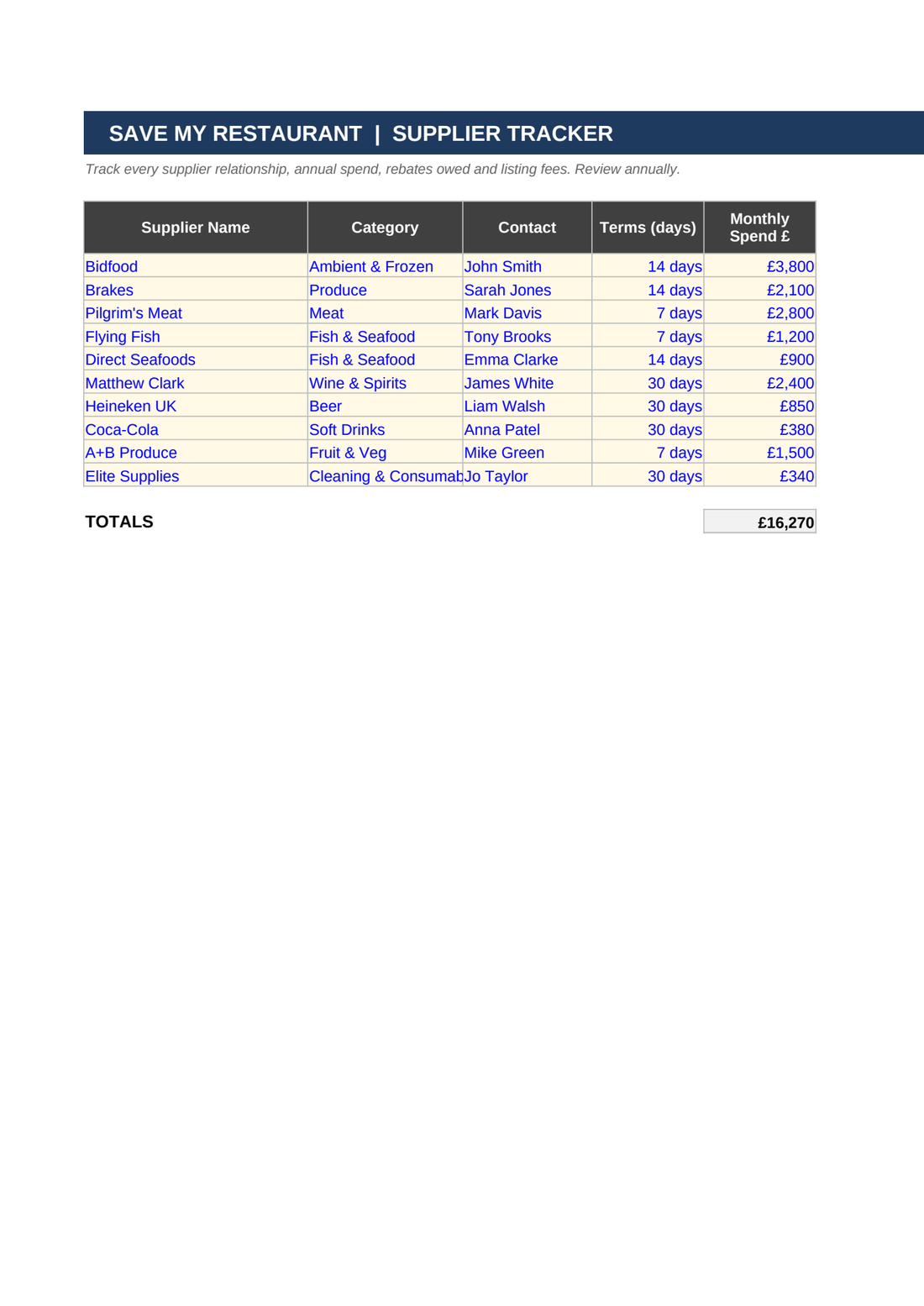
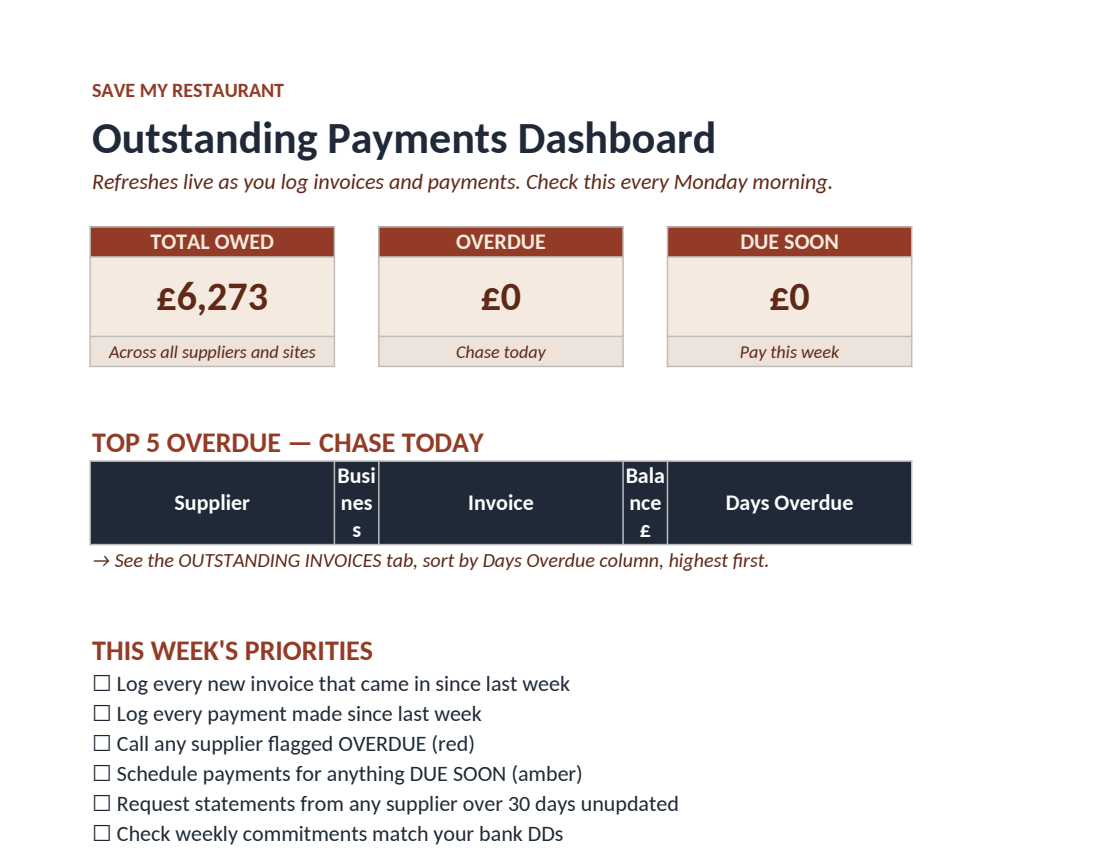
This playbook is the system a consultant would build for you at thousands of pounds a day, written once, for every operator who will never pay those rates. The numbers, the menu, the team, the tables, the suppliers, the cash. Six working spreadsheets with 649 formulas. Nine playbooks with real scripts. A 57-page book you can read in one sitting and apply tomorrow.
Not a course. Not a theory. Not another book that sits unread. A system you use every week, that pays for itself in the first month.
Read it tonight. Use it tomorrow. The bleeding stops the day you put the system in.
Not empty templates. Working spreadsheets with UK benchmarks, formulas, and example data already in. You fill in the cream cells. The tools do the rest.


Six working tools. 649 formulas. Open. Fill in. Learn something by tomorrow.
A UK brand agency recently quoted £50,000 for menus, brand work, and a website on a single independent site. This is the full operating system. Book, spreadsheets, playbooks, everything. The list price is £197. Until the first hundred sales, it's £67.
30-day money-back guarantee. If the playbook does not earn itself back in the first month, email us. No forms, no survey. You keep the files.
You do not need all four to recognise yourself. One is enough. The playbook is the same either way. The infrastructure you have been trying to build in your head, made real.
Full most nights, team works hard, food is good. But every month end the money isn't there. You need to see what the numbers are actually doing and fix what's leaking.
Weeknights are dead. The weekend covers the week. You know the marketing isn't working but you don't know what to do instead. You need a system for filling tables without feeling fake.
Supplier balances are creeping up. VAT quarter is coming. You're playing payment roulette. You need the tools to see cash 13 weeks ahead and manage credit properly.
Making money most months but couldn't tell me your food cost to two points, your best margin dish, or if Thursday earns its keep. You want the clarity to make better decisions.
Also for: newly-opened sites still finding their rhythm, operators running two or three sites who need better scaffolding. Not for: chains with finance teams, groups of ten plus sites, anyone looking for a get-rich-quick template.
There is a whole industry of consultancies, agencies, and advisors built around UK restaurants. Most of them do not want to work with you.
London consultancies charge £300 to £1,000 a day, with minimum engagements of £5,000. They work with chains, hotel groups, private equity, and investors. A UK-based coaching programme will ask for £1,500 a month to join a mastermind. An operations consultancy will take a £2,000 monthly retainer and send an analyst who has never run a kitchen.
And the brand agencies. One quoted this, unedited, for menu and brand work on a single independent site:
None of this is built for the independent operator running one site, working seven days a week, pulling fourteen-hour shifts, paying themselves last. The numbers do not work. The value is not there. And the advice is often generic, recycled, or written for businesses ten times the size of yours.
This playbook exists because that gap should not exist. The same financial thinking, the same menu engineering, the same operational discipline that a £50,000 engagement would deliver, compressed into a book, six working spreadsheets, and a set of playbooks you can download tonight and use tomorrow.
You do not need a consultant. You need a system. This is the system.
Every operator has heard of AI. Almost none are using it properly. Done right, it's the junior assistant you can't afford to hire. Drafting your social posts, answering reviews, writing supplier emails, analysing your competition, rewriting your menu descriptions. Not to replace your judgement. To give you four hours a week back.
A clearer picture of your local market in 30 minutes than most operators ever build.
Rewrite your whole menu in an afternoon. The kind of work £15,000 agencies charge for.
A week of Instagram captions drafted in 30 minutes. Edit, schedule, done.
Polished, brand-consistent replies to one-star and five-star reviews. The emotional tax removed.
The difficult emails you have been avoiding. Drafted firm but not aggressive.
The response that keeps a complaint private. The second opinion you would pay a consultant for.
Copy-paste prompts included. Tool-agnostic principles. Operators who adopt AI properly in the next twelve months will be measurably faster, sharper, and more resilient than the ones who do not.
Not consultants, not journalists. People who have opened sites, closed sites, made payroll in tight months, and got restaurants to profitability on the other side. The advice is what actually worked, not what sounded good.
Six working spreadsheets with 649 formulas. Nine playbooks with scripts, templates, and checklists. A 57-page book that ends every chapter with "what to do this week." Read it tonight, use it tomorrow.
Not for chains. For owners of one to five sites who wear every hat, work six days, and do not have an FD, an analyst, or a marketing team. The whole system is priced and paced for how you actually run the business.
Real messages. Real operators. First names only, used with permission.
we're flat out every weekend but still somehow tight on cash. went through that properly last night and it's obvious now where it's going. bit of a wake up tbh.
wasn't far off closing if I'm honest. just couldn't make it work. this gave me something to actually fix. it's moving again.
A working group of UK hospitality operators, finance specialists, and brand advisors. Most of us spend our days advising restaurant groups, hotel groups, and chains you'd recognise. Client agreements prevent us from naming individual contributors. The thinking, tools, and templates in the playbook are the same ones we apply to multi-site groups, written down for the independent operator who'll never have a £50,000 retainer.
Start with two: the Weekly P&L Tracker and the 13-Week Cashflow Forecaster. Use those for a month. You'll already have more financial clarity than most independent operators. The other four tools are there when you're ready.
Both. The book and tools work for operators with one site up to five or six. Beyond that you'll need a finance team of your own.
The tools and the principles work the same for fine dining, neighbourhood casual, pubs, cafes, and bars. Where they're weakest is quick-service chains, dark kitchens, and anything over five sites with dedicated finance. The numbers are UK hospitality averages, sterling throughout.
No. The spreadsheets have formulas built in. You fill in a few cream cells and the tool does the maths. If you can use email, you can use these.
The playbook is a 57-page book, six working spreadsheets, nine ready-to-use playbooks, and a 90-day operating plan. The alternative, in this industry, is a brand agency quoting £50,000 for menus and brand work, or a consultancy at £1,500 a day. The list price is £197. £67 is the launch price for the first 100 buyers. After that it goes back to £197 and stays there. If it does not earn itself back in your first month, we refund you.
30-day money-back guarantee. Email us, no forms, no survey. You keep the files. We'd rather refund someone cleanly than argue.
We're operators, finance people, and brand specialists. Most of us spend our days advising restaurant groups, hotel groups, and chains you'd recognise. Some of us run independent sites alongside that work.
We can't put our names to this. Client agreements prevent it, and frankly the day jobs pay too well to risk. But the gap between what large groups get for their money and what an independent can access has become absurd. A consultancy will charge £1,500 a day for thinking that takes us an hour. A brand agency will quote £50,000 for menu and brand work we'd do for a friend in a weekend.
This playbook is the work we couldn't justify giving away client by client, but felt the independent operator deserved access to. Same financial thinking. Same menu engineering. Same operational discipline. Compressed into a system you can download tonight and use tomorrow.
We don't take calls. We don't do site visits. We don't run a coaching programme. The playbook is the work.
The only question is what shape your restaurant is in at the end of them.